

The hybrid workplace has become the dominant organizational model, yet many design decisions continue to rest on assumptions that don't survive contact with actual work patterns. Gensler's Global Workplace Survey found that only 15% of hybrid employees believe their workplace is designed to support how they actually work. The gap between design intent and user experience represents a missed opportunity, but also a measurable cost in underutilized space, compromised productivity, and talent attrition.
Drawing on post-occupancy evaluations, space utilization studies, and strategic planning engagements across corporate, healthcare, higher education, and technology sectors, we've identified five pervasive design assumptions that consistently produce suboptimal outcomes. Understanding these misconceptions and the research that contradicts them is essential for architects, facilities leaders, and workplace strategists developing hybrid environments.
| Misconception | Research Finding | Design Implication |
| Desk Sharing Eliminates Belonging | Workplace belonging correlates more strongly with social density and meaningful colleague interactions than with assigned seating (Journal of Environmental Psychology). | Implement "distributed anchoring" through team neighborhoods, personal storage, and preference-based booking systems rather than maintaining 1:1 desk ratios. |
| Hybrid Offices Need Maximum Collaboration Space | Knowledge workers require 40-50% of their workday for focused individual tasks even when they commute primarily for collaboration. | Provide 50-60% focused/private settings and 40-50% collaborative/social settings—typically the inverse of initial client requests. |
| Hybrid Work Proportionally Reduces Space Need | 70-90% of in-office days cluster on Tuesday-Thursday while Monday-Friday occupancy drops to 30-40%, creating bimodal distribution rather than arithmetic average (occupancy data analysis). | Optimize for peak rather than average occupancy, targeting 20-30% space reduction with reconfigurable furniture systems and attendance coordination tools. |
| Existing Furniture Can Be Reconfigured | Pre-hybrid furniture lacks acoustic performance for video-heavy environments where one-sided call patterns are more distracting than in-person conversation (post-occupancy acoustic studies). | Specify hybrid-optimized furniture with integrated acoustic panels, wireless power/data, and tool-free reconfiguration capabilities including enclosed focus booths. |
| One Model Should Apply Organization-Wide | Work patterns vary dramatically by function; employees perceive differentiated solutions as fair when differentiation relates to work requirements rather than status (organizational justice research). | Develop multiple spatial typologies deployed by functional needs while maintaining consistent quality standards and coherent design language. |
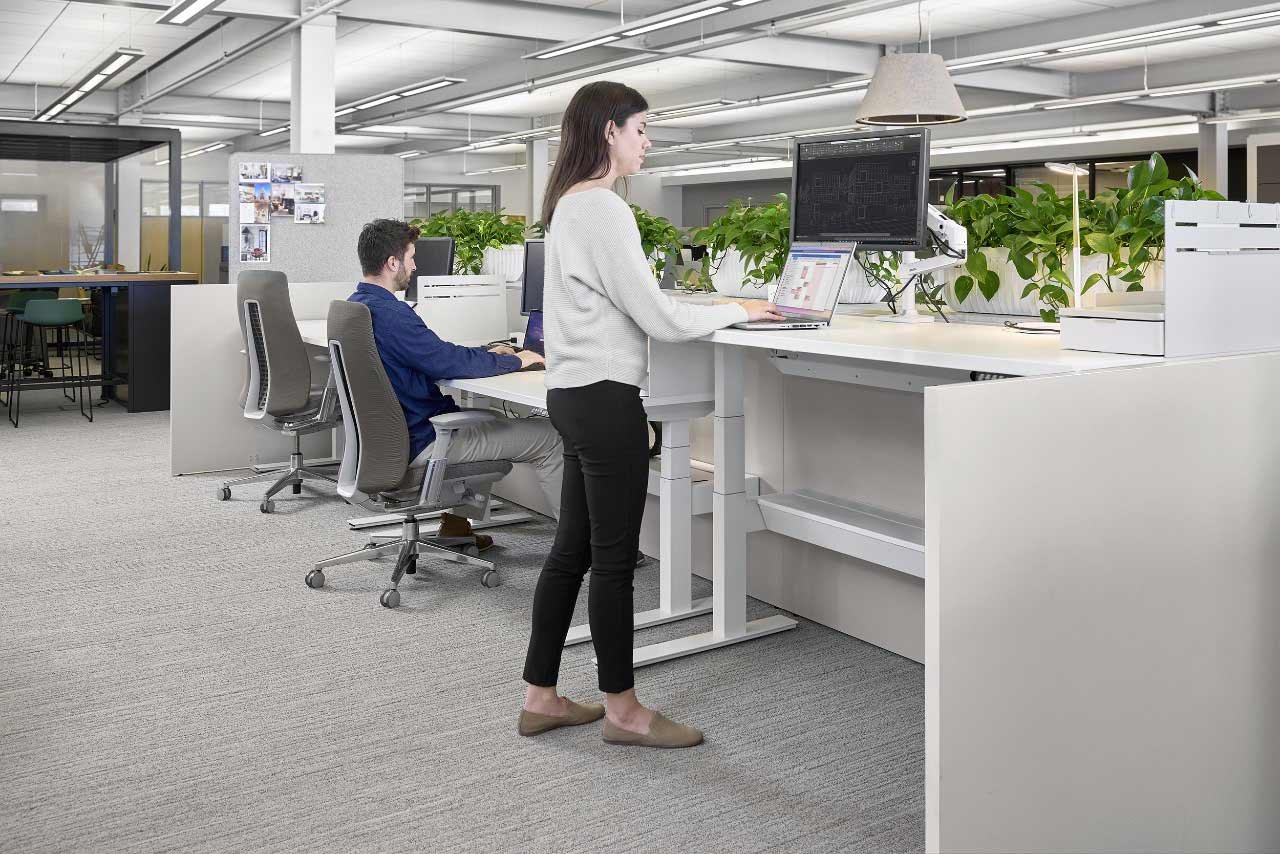
Assumption 1: Desk Sharing Eliminates Territorial Belonging
The misconception: If we implement hoteling or free-address systems, employees will feel like transient visitors rather than organizational members. The only way to maintain workplace identity is through assigned, personalized workstations.
The research: Environmental psychology distinguishes between physical territory and psychological ownership. Studies published in the Journal of Environmental Psychology demonstrate that workplace belonging correlates more strongly with social density—the frequency of meaningful interactions with colleagues—than with assigned seating. Organizations with high-performing free-address systems typically see higher belonging scores than assigned-seating counterparts, provided the design supports team neighborhoods and informal collision.
Organizations with high-performing free-address systems typically see higher belonging scores than assigned-seating counterparts...
The design implications: Successful hoteling environments require what is known as "distributed anchoring", which is multiple touchpoints that provide stability without fixed workstations. Team neighborhoods establish a home base identity. Personal storage (lockers, mobile pedestals) accommodates belongings between visits. Booking systems that remember preferences reduce daily friction. The 1:1 desk-to-employee ratio becomes unnecessary when belonging is architected through spatial relationships rather than property assignment.
The cost of the misconception: Organizations maintaining full seat counts despite 40-50% average daily occupancy typically over-invest in individual workstations by 30-40%. For a 200-person organization, this represents hundreds of thousands of dollars in furniture, real estate, and operating costs supporting empty desks. Our space utilization analyses routinely identify recapture opportunities of 20-30% through right-sizing based on actual presence patterns rather than theoretical headcount.

Assumption 2: Hybrid Offices Need Maximum Collaboration Space
The misconception: Since employees come to the office primarily for collaboration, we should convert individual workspace into meeting rooms, huddle spaces, and open collaboration zones. The hybrid office is fundamentally a collaboration facility.
The research: Time-use studies consistently show that even highly collaborative knowledge workers require 40-50% of their workday for focused individual tasks, including pre-meeting preparation, post-meeting synthesis, complex analysis, and deep thinking. This misconception conflates reason for commuting with activities during the day. Employees may come to the office for collaboration, but their day still includes substantial focus work.
Employees may come to the office for collaboration, but their day still includes substantial focus work.
We have found that the optimal collaboration-to-focus ratio varies by work type, but even innovation-intensive teams require significant quiet space. Organizations that over-index on collaboration create environments where employees can't find anywhere to process the meetings they came in for, resulting in headphone-wearing workers occupying collaboration zones for individual work, or booking conference rooms solo simply to escape open-plan noise.
The design implications: An effective hybrid design provides a spectrum of settings, from high-enclosure focus environments to high-exposure social zones. The ratio depends on organizational work patterns, but our programming research typically recommends 50-60% focused/private settings and 40-50% collaborative/social settings. This is often the inverse of what clients initially request. Phone rooms, focus booths, and enclosed individual pods become essential infrastructure, not afterthoughts.
The cost of the misconception: We've documented multiple cases where organizations invested six figures converting individual workspace to collaboration zones, then spent comparable amounts converting some of that space back within 18-24 months. The reconversion costs exceed what balanced initial design would have required. More significantly, the interim period of inadequate focus space produces productivity losses and employee frustration that don't appear on project budgets.
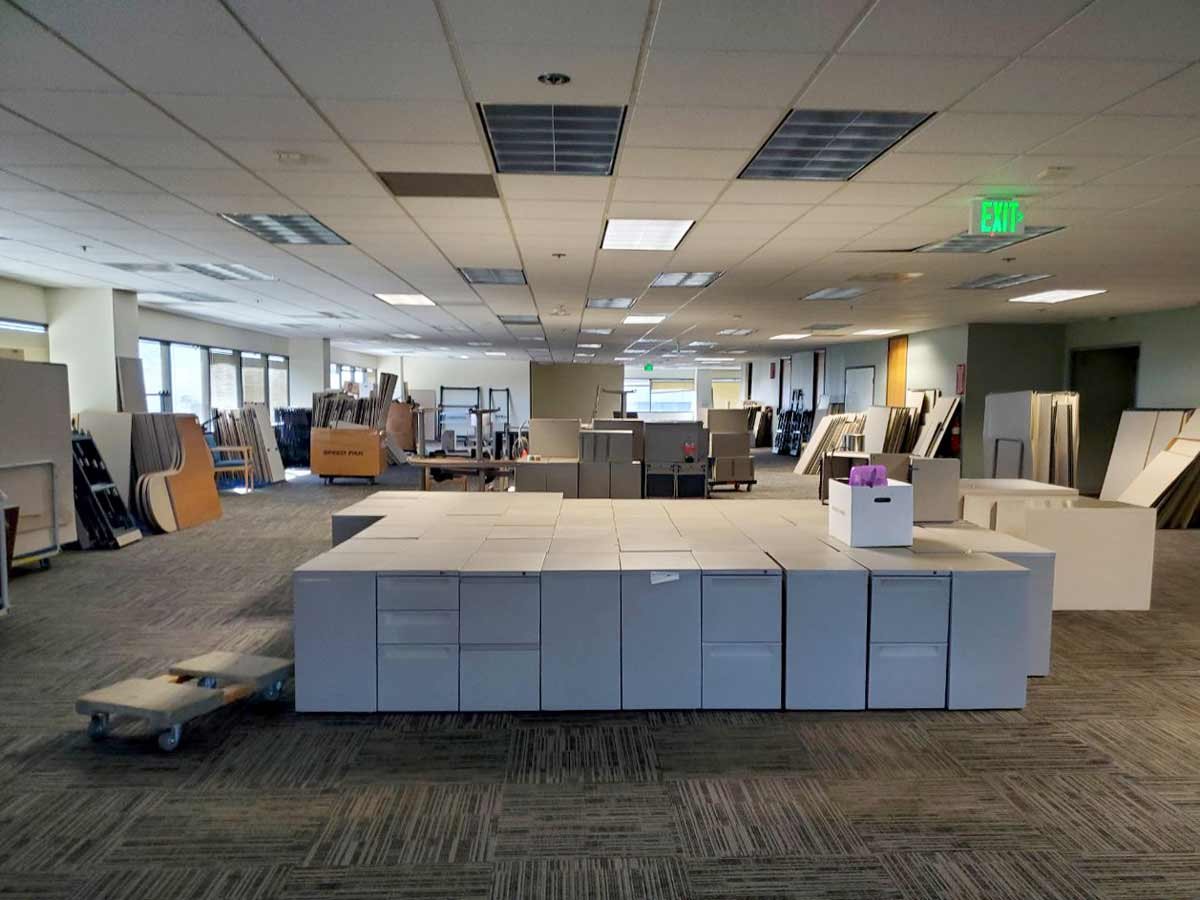
Assumption 3: Hybrid Work Proportionally Reduces Space Need
The misconception: If employees are in the office only 60% of the time, we can reduce our real estate footprint by 40%. Space reduction should track attendance reduction mathematically.
The research: This assumption ignores attendance distribution. Occupancy data from hundreds of hybrid organizations reveals consistent weekly patterns: 70-90% of in-office days cluster on Tuesday, Wednesday, and Thursday, while Monday and Friday occupancy often drops to 30-40%. Peak days approach or exceed pre-hybrid attendance, while low days feel wastefully empty. The arithmetic average of 60% attendance masks a bimodal distribution that defies simple space reduction.
The arithmetic average of 60% attendance masks a bimodal distribution that defies simple space reduction.
Dunbar's number research on group dynamics adds another complication: collaborative effectiveness depends partly on co-presence with specific teammates. Space planning that optimizes for overall occupancy without considering who is present when can produce scenarios where team members rarely overlap despite coming to the office regularly.
The design implications: Effective hybrid space planning optimizes for peak rather than average occupancy while designing for graceful low-occupancy periods. This typically yields 20-30% space reduction rather than 40-50%—still significant, but requiring different strategies. Furniture systems that can be easily reconfigured between dense and dispersed layouts help low days feel intentional rather than abandoned. Booking systems that encourage attendance coordination support team co-presence.
The cost of the misconception: Over-aggressive space reduction based on average occupancy produces terrible peak-day experiences—not enough desks, perpetually unavailable meeting rooms, and frustrated employees who sacrificed home office setups only to find inadequate workplace support. Some organizations have been forced to re-expand, paying moving costs and furniture acquisitions twice.
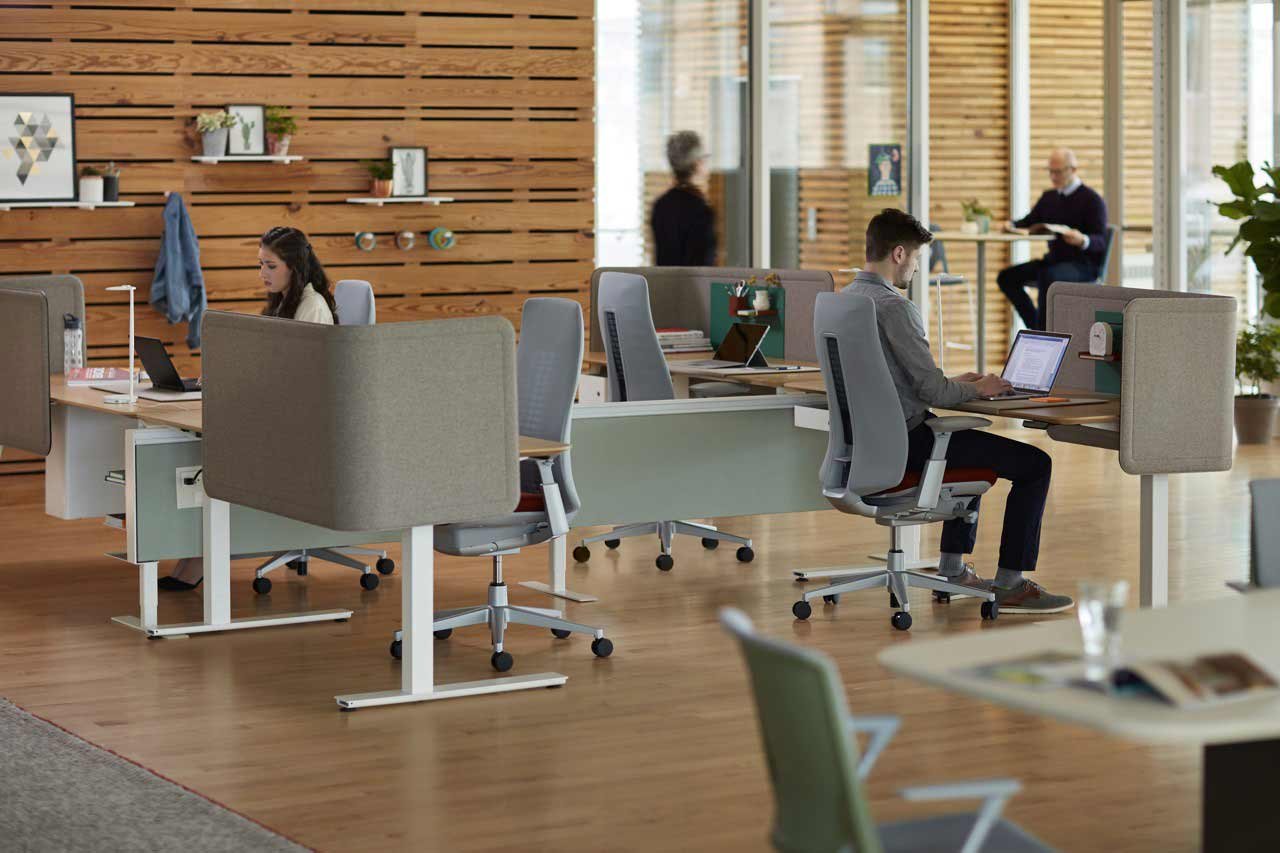
Assumption 4: Existing Furniture Can Simply Be Reconfigured
The misconception: Our current furniture worked before hybrid; facilities can just rearrange it into neighborhoods and collaboration zones. We don't need new investments, we need creative space planning.
The research: Pre-hybrid furniture systems were designed for different use cases and different acoustic environments. Traditional panel-based systems with fixed electrical and data connections assume permanence; reconfiguration requires facilities intervention, often including electrical work. Open benching that functioned adequately when neighbors conversed with each other becomes intolerable when half of those neighbors are on video calls simultaneously.
Pre-hybrid furniture systems were designed for different use cases and different acoustic environments.
Post-occupancy acoustic studies consistently identify sound transmission as the primary hybrid office complaint. The background din of in-person conversation that characterized pre-pandemic offices has been replaced by the one-sided vocalization patterns of video calls, which are acoustically distinct and cognitively more distracting. Furniture systems designed before widespread video conferencing lack the acoustic separation hybrid work demands.
The design implications: Hybrid-optimized furniture prioritizes acoustic performance, visual privacy options, and infrastructure-free relocation. Modern systems integrate acoustic panels, power-and-data without hard wiring, and modular components designed for tool-free reconfiguration. Enclosed focus booths and phone rooms, unavailable as furniture categories a decade ago, have become essential hybrid components. Attempting to retrofit pre-hybrid furniture into these requirements typically produces compromised outcomes at comparable total cost.
The cost of the misconception: Our renovation assessments frequently find organizations that have spent more on repeated reconfiguration, piecemeal acoustic additions, and workaround furniture purchases than comprehensive hybrid-appropriate systems would have cost initially. The "savings" from retaining existing furniture become the most expensive decision in the project when measured over three-to-five-year periods.
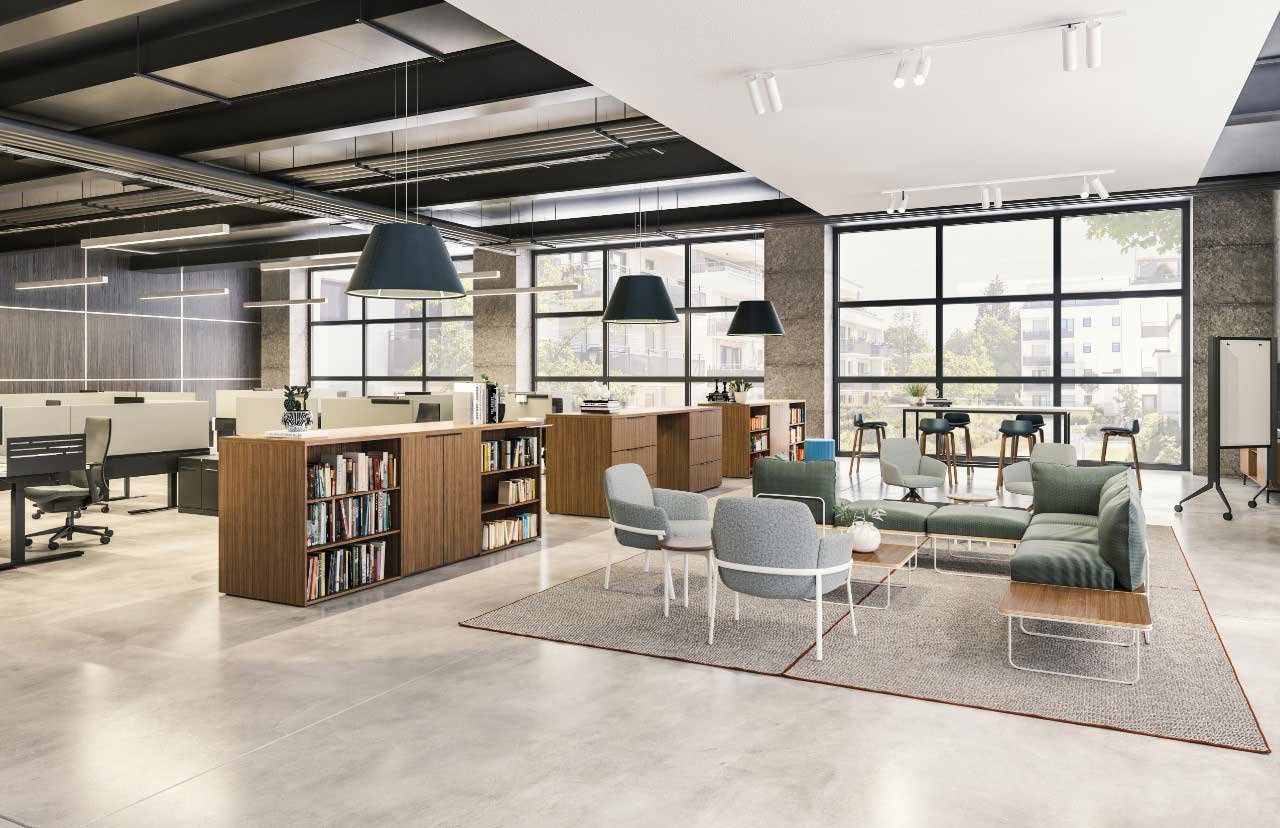
Assumption 5: One Hybrid Model Should Apply Organization-Wide
The misconception: Fairness requires consistent hybrid policies and workplace design across the organization. Either everyone uses hoteling or everyone has assigned seats; either all departments follow the same in-office schedule or none do.
The research: Work patterns vary dramatically across functions, even within single organizations. Engineering teams typically require extended focus periods and asynchronous collaboration. Sales and client services benefit from professional environments and on-demand meeting space. Finance and legal require confidential conversation capabilities. Executive leadership needs both accessibility and privacy for sensitive discussions. Forcing uniform spatial solutions onto divergent work types optimizes for administrative simplicity at the expense of functional performance.
Employees generally perceive differentiated workplace solutions as fair when the differentiation clearly relates to work requirements rather than status or favoritism.
Research on organizational justice distinguishes between equality (identical treatment) and equity (treatment appropriate to need). Employees generally perceive differentiated workplace solutions as fair when the differentiation clearly relates to work requirements rather than status or favoritism.
The design implications: Effective hybrid design develops multiple spatial typologies deployed according to functional needs: hoteling neighborhoods for mobile roles, team zones for collaborative groups, dedicated workspace for confidentiality-dependent functions, and flex zones that accommodate overflow and visitors. The unifying element isn't identical furniture, it's consistent quality standards, equivalent access to amenities, and coherent design language that maintains organizational identity across diverse settings.
The cost of the misconception: Uniform hybrid models generate widespread workarounds. Teams with poorly matched space develop unofficial arrangements, storage hacks, and scheduling accommodations that defeat the policy's administrative goals while adding friction to everyone's experience. The resulting inconsistency, but without intentional design, produces the worst of both approaches.
From Assumptions to Evidence-Based Design
These misconceptions persist because they contain surface plausibility. Each simplifies genuinely complex design challenges into apparently straightforward solutions. The problem is that hybrid workplace design is complex and it requires understanding organizational culture, work patterns, presence dynamics, acoustic requirements, and technological infrastructure simultaneously.
The organizations achieving successful hybrid environments share common approaches: they gather real utilization data rather than relying on assumptions, pilot spatial concepts before committing to full-floor implementations, specify furniture systems designed for hybrid acoustic and flexibility requirements, and differentiate spatial strategies based on demonstrated functional needs rather than administrative convenience.
We support this evidence-based approach through programming research, post-occupancy evaluation, manufacturer-neutral specification, and implementation coordination that bridges strategic intent and operational reality. If you're questioning whether any of these assumptions have influenced your hybrid workplace planning, or if you're living with the consequences of decisions made under these misconceptions, we welcome the strategic conversation that can reframe your approach.
Want to ensure your hybrid workplace investments deliver measurable value?
Contact our workplace strategy team at Unisource Solutions for an evidence-based assessment.