

As hybrid work reshapes the professional services sector, law firms face a design challenge that most corporate workplace frameworks were never built to solve. Confidentiality isn't an amenity in a law firm; it's a professional obligation. And the spatial decisions made before a single attorney occupies the space either protect it or undermine it.
The return-to-office conversation has forced firms to reconcile institutional culture with talent market reality. Am Law 100 firms saw associate attrition reach historic highs in 2022–2023, and hybrid flexibility became a standard expectation in recruiting. That tension is real, but the spatial problem it creates is solvable.
Gensler's 2025 Global Workplace Survey found that employees with high choice in how and where they work are nearly three times more likely to say their workplace supports both individual and team productivity. The challenge for law firms is delivering that choice without compromising the obligations at the center of legal practice.
Three Layers of Confidentiality
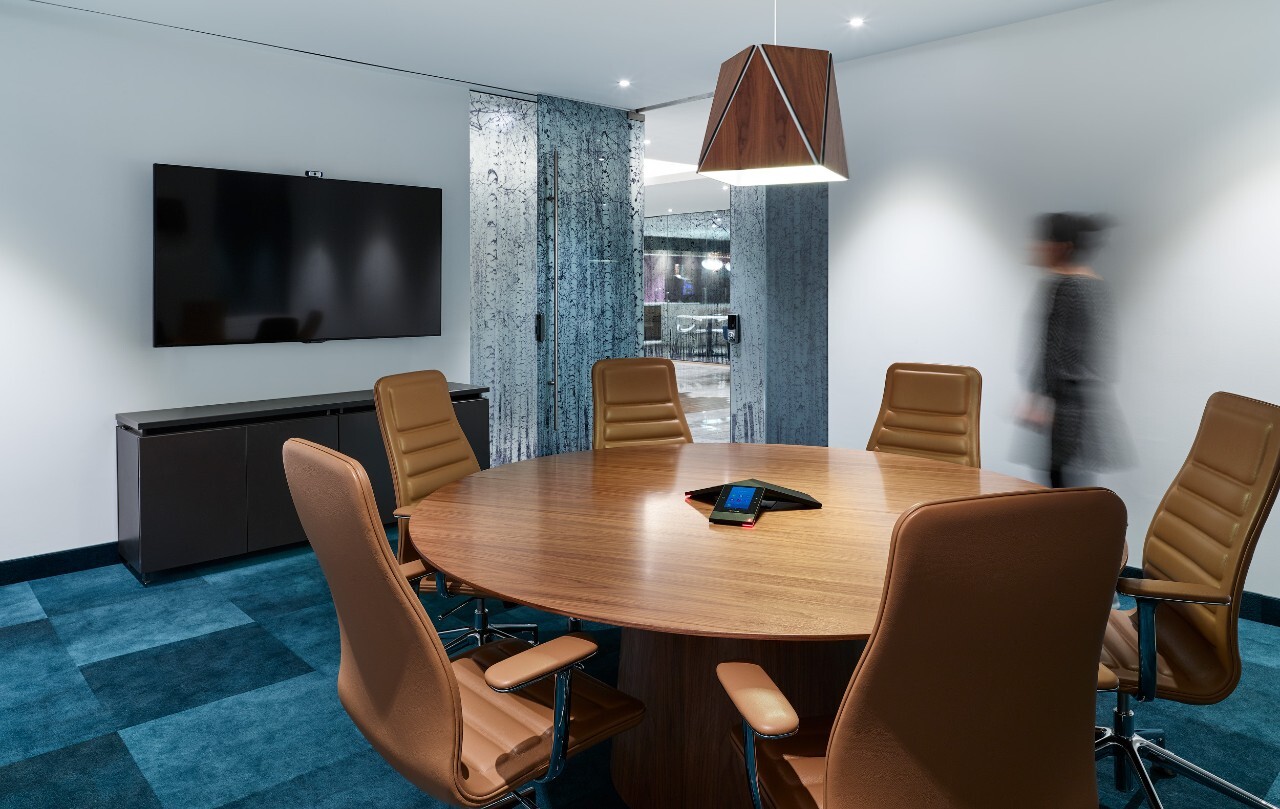
Legal work involves confidentiality obligations that operate at three distinct spatial scales.
The first is attorney-client privilege. ABA Model Rules of Professional Conduct, Rule 1.6, requires that communications between attorneys and clients remain confidential. Any design condition that allows an unintended party to overhear, observe, or access those communications represents a real and actionable exposure—not a theoretical one.
The second layer is matter confidentiality: protecting work product, case materials, and client information from access by attorneys and staff not associated with a specific matter. Cross-matter information exposure is a bar compliance issue, but it's equally a competitive intelligence problem. A litigator overhearing a real estate partner's client call is not a minor inconvenience. It's a potential conflict.
The third is competitive intelligence protection: safeguarding client identities, business issues, and strategic positions that could compromise trust or trigger conflict-of-interest review if exposed.
Confidentiality in the hybrid law firm is not a policy problem; it's a spatial design problem. Acoustic engineering, floor plate strategy, and furniture specification are the tools that actually protect privilege. Policies tell attorneys to be careful. Thoughtful design makes carelessness structurally difficult.
Practice Group Neighborhoods: Separation by Design
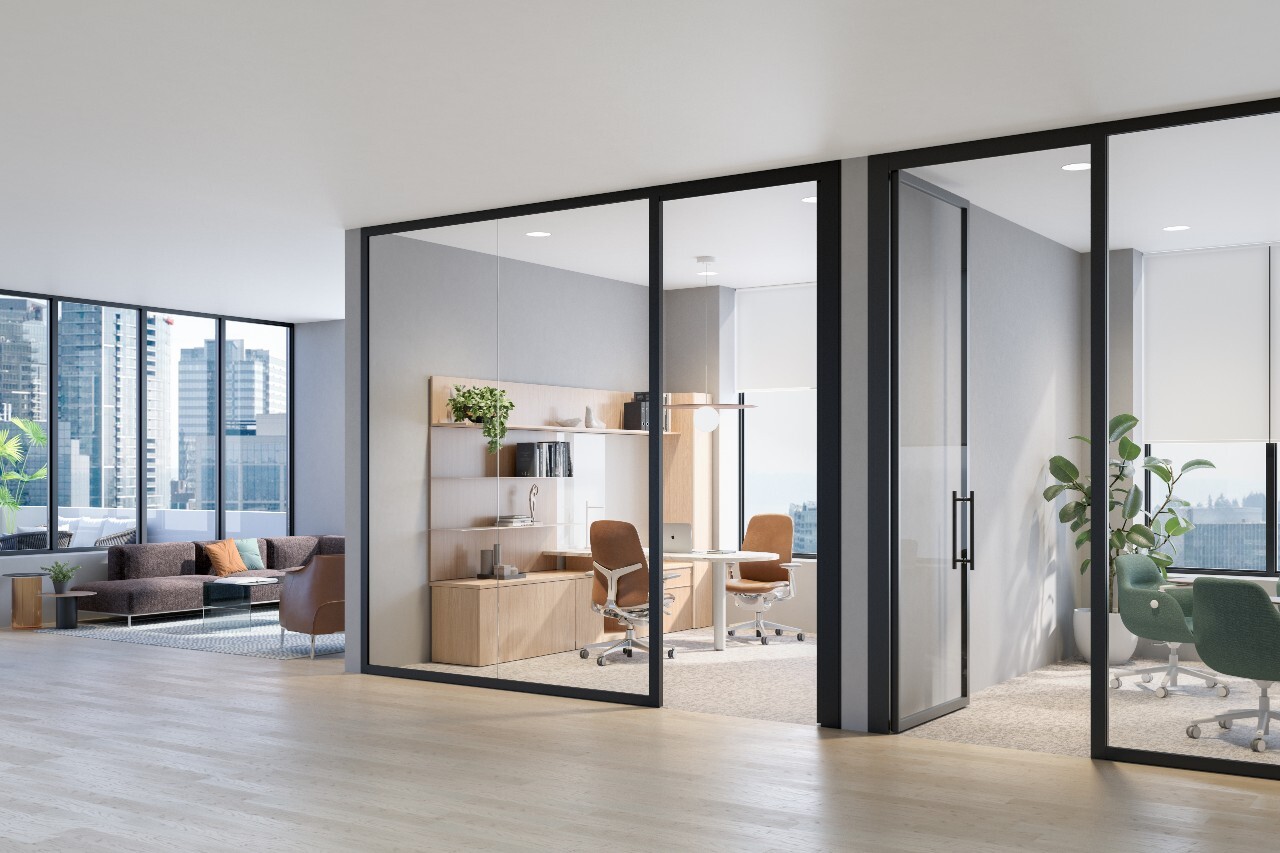
The most effective spatial framework we use for legal hybrid environments adapts the neighborhood model to practice group organization.
In a practice-neighborhood layout, Real Estate has a defined zone with its own shared resources, focus settings, and enclosed meeting capacity. Litigation has an equivalent zone. Attorneys hotel among positions within their practice neighborhood rather than across the floor—preserving the efficiency gains of hoteling while maintaining the matter separation that matters most.
Furniture specification in these zones uses spatial definition—not physical partition—to establish boundaries. Panel heights and high-back screen configurations at neighborhood edges, acoustic treatment at transition zones, and material palette variation that provides intuitive orientation without institutional heaviness. Drawing from our relationships with 300+ manufacturer partners, we have the sourcing depth to match the right product to each layer of this strategy, whether that's architectural-grade panel systems, freestanding screens, or custom millwork through Platform, our in-house custom furniture brand. The design language communicates separation. It doesn't impose it.
Acoustic Privacy: The Investment That Prevents Incidents
Speech intelligibility—the point at which conversation becomes comprehensible to an unintended listener—is a measurable acoustic performance parameter. ASTM E1130 provides the objective measurement framework for speech privacy in open-plan environments. Designing legal hybrid spaces to the privacy side of that threshold requires a layered approach:
-
Sound masking systems calibrated to the conversation density and frequency typical of legal environments, which run higher than most corporate settings
-
Sound-absorptive surface treatments on ceilings, vertical elements, and furniture upholstery selected for NRC (Noise Reduction Coefficient) values appropriate to the acoustic load
-
Strategic positioning of focus work settings away from high-traffic circulation paths, where ambient noise is highest
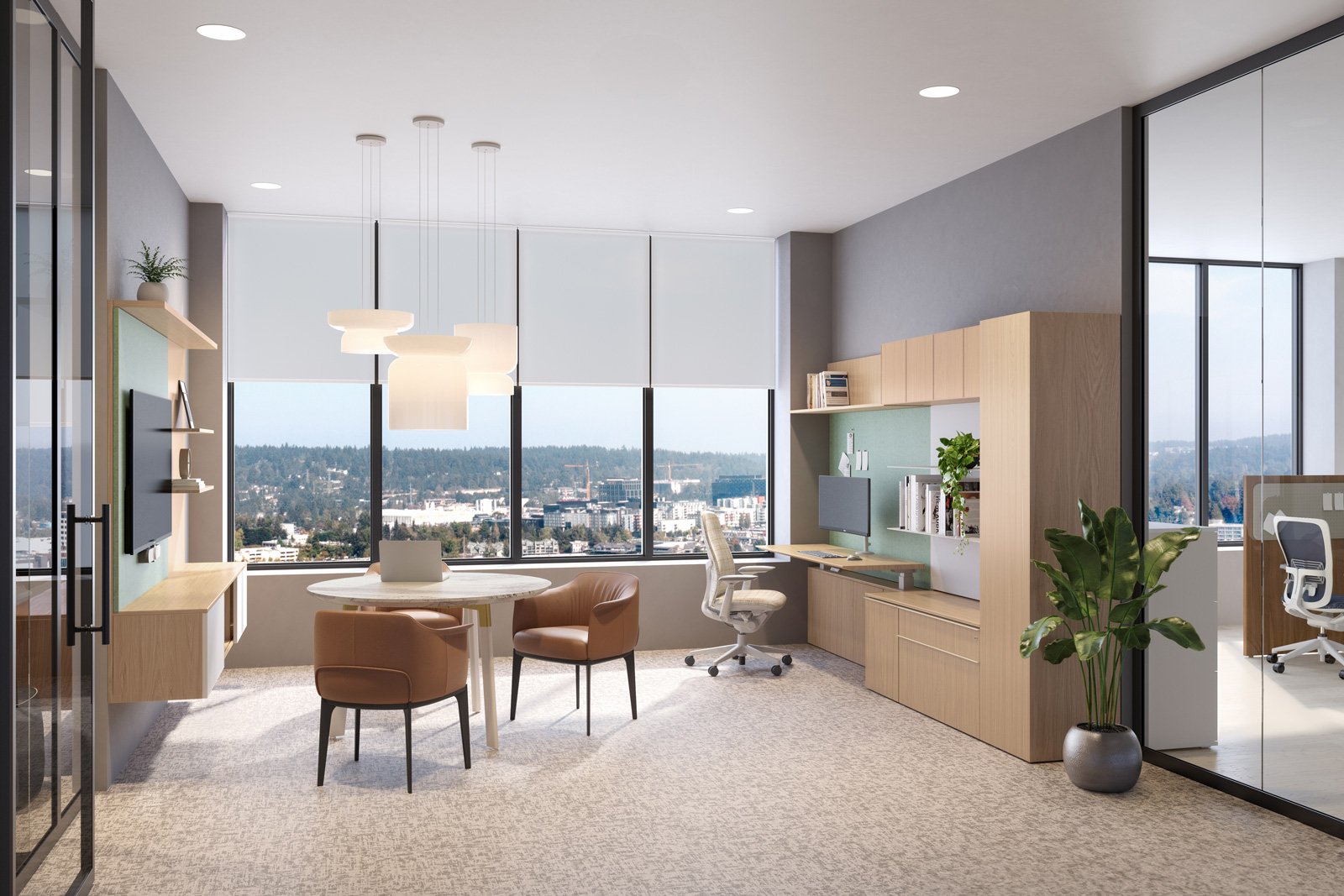
For environments where full enclosure isn't feasible, acoustically engineered privacy pods offer a practical solution—a confidential call and conversation space without the real estate footprint of a dedicated conference room. We work with our A&D partners to identify pod and modular enclosure systems that meet acoustic performance thresholds and the design character a firm has worked to establish.
Enclosed spaces require independent acoustic analysis. Conference rooms with plenum paths, undersized partition walls, or HVAC return air paths are common in commercial construction and routinely pass visual inspection while failing acoustic performance. For legal environments, we target a minimum STC (Sound Transmission Class) rating of 50 for standard client meeting rooms, with sensitive deposition and negotiation rooms warranting 55–60. These ratings should be verified by acoustic measurement before occupancy, not assumed from spec documents.
Visual Privacy: Screen Geometry, Positioning, and Physical Controls
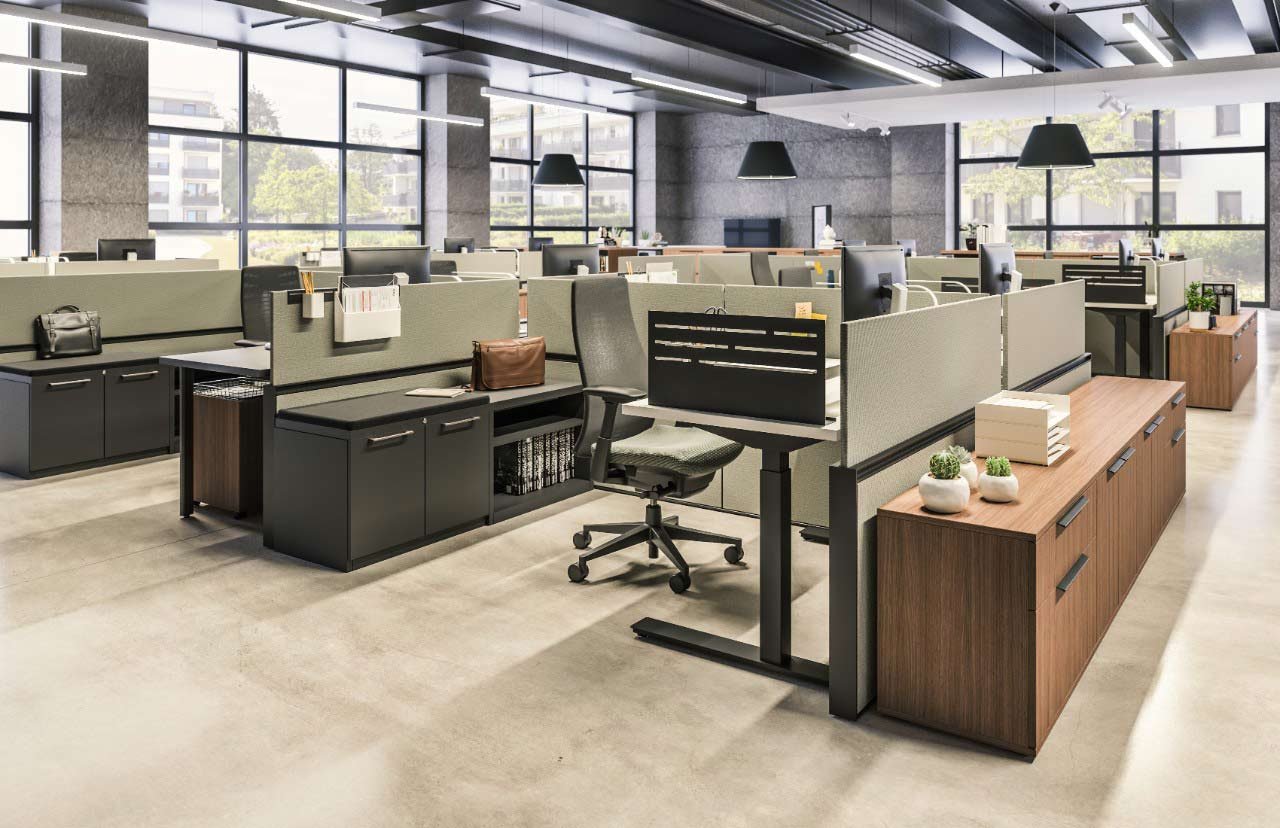
Physical privacy screen filters, which narrow the viewing angle of monitors to approximately 60 degrees, are among the most reliable and consistently underspecified visual controls available. They are also among the least expensive items in a legal workplace specification. We advocate for keeping them in scope because the return on investment, measured in incidents prevented, is difficult to overstate.
Workstation positioning relative to circulation geometry matters equally. Positions where screens face high-traffic pathways should be minimized. Positions where screens face away from circulation or are shielded by panel elements should be maximized. This is a floor plate planning decision—it must be addressed at the layout stage to be effective, and it's something we address during the initial space planning engagement, not as a correction after installation.
Height-adjustable desking introduces a visual privacy variable that fixed-height stations don't present: as desk height increases from seated to standing position, screen height and viewing angle shift, potentially exposing content that was protected at seated height. Our visual privacy analysis addresses the full height range of adjustable stations—and our furniture and panel specifications account for both positions.
Client-Facing Environments: Confidentiality as Competitive Differentiation
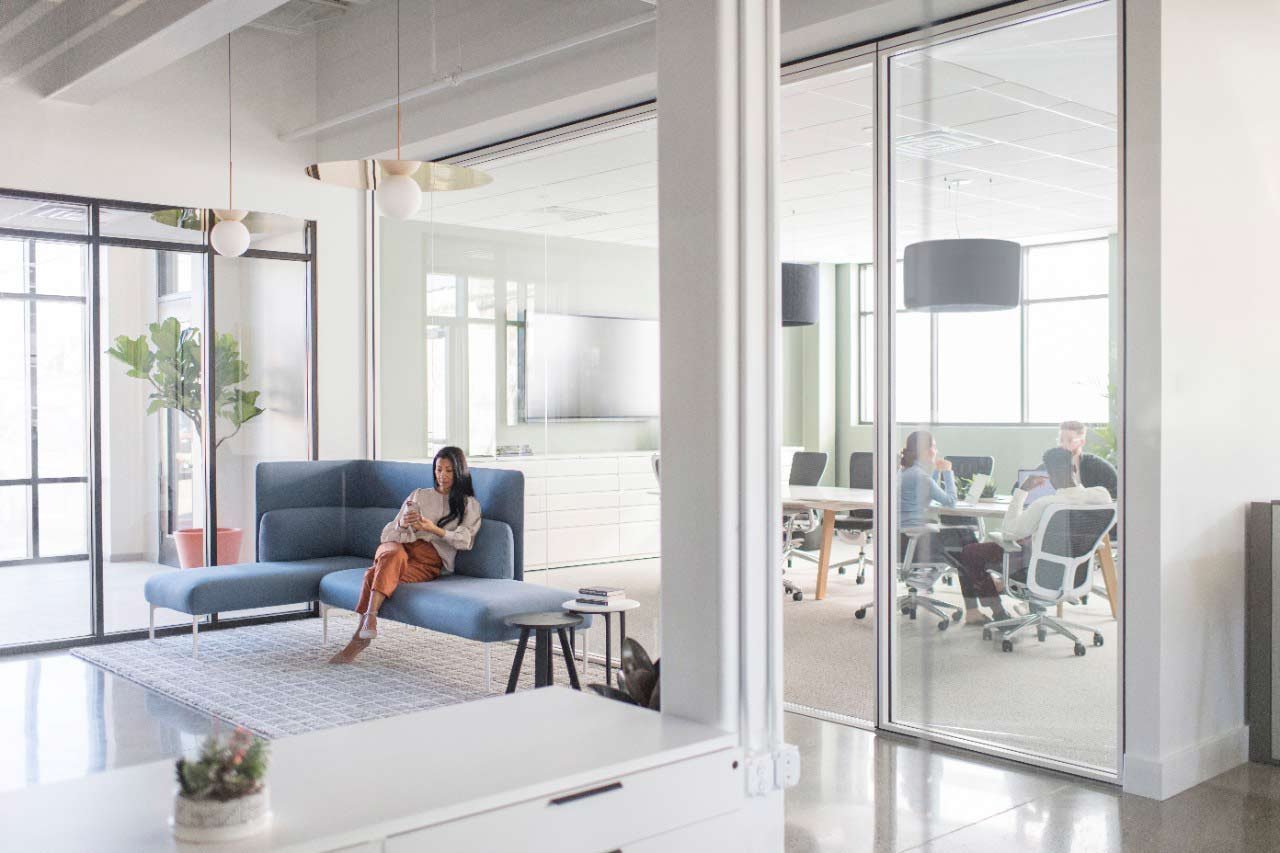
Client reception and meeting environments carry confidentiality requirements that extend beyond attorney work areas. A visitor who can observe case names on casework, overhear conversation from an adjacent conference room, or read a conflict-check list on a reception desk has been given an inadvertent disclosure. These aren't hypothetical scenarios; they're the incidents that generate internal reviews, client conversations, and, in serious cases, bar complaints.
The most effective legal client environments we've designed resolve this tension directly: they're simultaneously the most confidentiality-protective and the most hospitality-forward spaces in the building. Acoustically excellent. Spatially generous. Specified with materials that communicate organizational character rather than institutional economy. A reception environment that protects confidentiality while expressing the firm's quality of judgment is a competitive differentiator at the moment a client or prospective lateral hire forms their first impression.
What This Means for Specification
Law firm projects require acoustic performance verification, not assumption. They require floor plate logic that accounts for matter confidentiality and not just traffic flow. And they require furniture specifications that treat privacy screen filters, panel height strategy, and adjustable-height visual privacy analysis as standard scope, not value-engineering targets.
Ready to Design a Workplace That Protects Privilege?
Our team works with law firms and their A&D partners to plan environments that support both hybrid flexibility and the confidentiality obligations legal practice demands. Contact us to schedule a confidentiality-focused workplace assessment.