

Public sector facilities manaovvernovgers operate at an increasingly complex intersection: aggressive sustainability mandates from state climate policy, ESG scrutiny from municipal bond markets, employee expectations shaped by private sector environmental leadership, all constrained by procurement rules designed around the lowest initial cost. The apparent tension between environmental goals and fiscal responsibility has stalled many public agency sustainability initiatives.
Yet this framing overstates the conflict. Drawing on implementation experience with California state agencies, county governments, K-12 districts, higher education institutions, and municipal facilities, we've identified procurement strategies that satisfy both environmental standards and taxpayer accountability. The key lies in understanding how sustainability can be structured within existing procurement frameworks, not as an exception or premium, but as standard practice that often improves long-term fiscal outcomes.
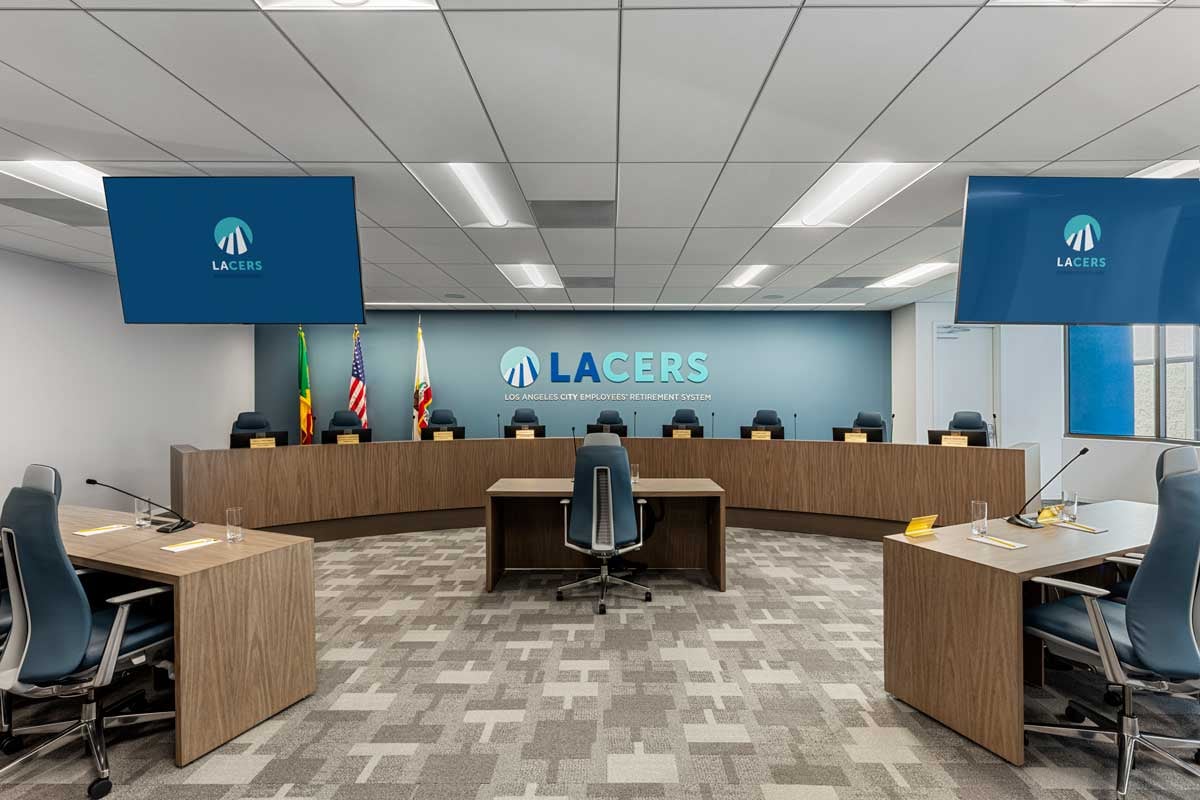
LA City Employees' Retirement System, Los Angeles, California
The Regulatory Convergence Driving Public Sector Sustainability
California's Buy Clean Act establishes embodied carbon limits for construction materials in state-funded projects, creating precedent that municipalities and agencies increasingly adopt voluntarily. Federal grant programs, from FEMA hazard mitigation to EPA environmental justice funding, embed sustainability criteria in eligibility requirements. The SEC's climate disclosure rules, while primarily targeting publicly traded companies, influence municipal bond markets where ESG-focused investors scrutinize public agency environmental practices.
For facilities managers, these converging pressures transform sustainability from an optional enhancement to a compliance requirement. The question isn't whether to address environmental criteria. It's how to do so within procurement rules that weren't designed for lifecycle assessment or circular economy principles. The agencies succeeding at this integration have developed approaches that work within existing frameworks rather than requiring procurement reform.
Port of Long Beach, Long Beach, California
Strategy 1: Specification-Embedded Sustainability
The most powerful lever in public procurement is the specification itself. Sustainability requirements embedded in specifications, rather than weighted as evaluation factors, become mandatory qualifications that all bidders must meet. This approach maintains competitive bidding while establishing environmental floors.
Third-party certifications provide the objective, verifiable standards that procurement rules require. BIFMA LEVEL certification (the furniture industry's multi-attribute sustainability standard) establishes criteria across materials, energy, human health, and social responsibility. Greenguard Gold certification limits chemical emissions affecting indoor air quality. This is a health-and-safety specification that coincidentally advances sustainability goals. SCS Indoor Advantage provides additional air quality verification. Cradle to Cradle certification addresses circular design and material health.
The strategic insight: many quality manufacturers already meet these certifications without price premiums because sustainability has become standard practice across the industry. Specifying LEVEL Silver or Greenguard Gold doesn't necessarily reduce the bidder pool or increase costs. It simply ensures that whatever product wins competitive bidding meets established environmental standards.
Unisource Solutions helps public sector clients develop specification language that is both sustainability-rigorous and market-realistic. This requires understanding which certifications are widely achievable (maintaining competitive bidding) versus aspirational (potentially limiting competition or increasing costs). The goal is to raise the floor without creating specifications that only one or two manufacturers can meet.

Santa Monica College Santa Monica, California
Strategy 2: Cooperative Purchasing Agreements
Cooperative purchasing programs like OMNIA Partners, Sourcewell, NASPO ValuePoint, California Multiple Award Schedules, and similar vehicles offer pre-negotiated contracts that aggregate buying power across thousands of public agencies. These agreements increasingly incorporate sustainability requirements that would be difficult for individual agencies to specify and verify through one-off procurements.
The procurement advantages are substantial. Cooperative agreements have already completed competitive bidding processes, satisfying legal requirements while eliminating agency-level solicitation costs. The aggregated volume produces pricing that individual agencies couldn't achieve independently. Contract terms typically include sustainability provisions; certification requirements, take-back programs, and recycled content standards that transfer verification responsibility from the purchasing agency to the cooperative administrator.
For facilities managers facing sustainability scrutiny from oversight bodies, cooperative purchasing provides built-in documentation. The agency didn't select a premium sustainability option. It was purchased through a competitively bid government contract that happens to include environmental standards. Sustainability is embedded in a pre-approved procurement vehicle rather than requiring special justification for each purchase.
Unisource Solutions maintains contract relationships across major cooperative purchasing programs, allowing us to help public sector clients identify which vehicles best serve their specific sustainability requirements, compliance needs, and product specifications.

County of Los Angeles Department of Public Social Services, Monterey Park, California
Strategy 3: Total Cost of Ownership Analysis
Public procurement's focus on initial acquisition cost creates a structural bias toward products that may cost more over their useful life. A task chair purchased at the lowest bid might require replacement in five years, while a quality alternative at a higher initial cost performs for fifteen years. The "savings" disappear when measured across the actual lifecycle.
Many public procurement frameworks can incorporate total cost of ownership (TCO) analysis when properly documented. TCO evaluation examines: expected useful life (how many years before replacement), maintenance requirements (parts, repairs, service calls), end-of-life costs (disposal fees, recycling charges, or residual resale value), and reconfiguration adaptability (whether furniture can accommodate reorganization without replacement).
TCO Comparison Horizon
15–20 year models frequently demonstrate lower total cost for higher-initial-cost sustainable options. Replacement cycles, maintenance, and disposal costs often eliminate apparent savings from lower bids.
Sustainable furniture typically outperforms on TCO metrics. Durability is inherent to sustainability. Products designed for longevity consume fewer resources over their lifecycle. Modular systems designed for eventual disassembly can be reconfigured rather than replaced as organizational needs change. Higher-quality construction retains residual value for resale or donation, while budget furniture often has negative end-of-life value (disposal costs exceed any recovery).
Unisource Solutions develops TCO models for public sector clients that translate sustainability benefits into procurement language. The analysis documents projected replacement cycles based on warranty terms and industry benchmarks, maintenance cost estimates based on historical data from similar products, end-of-life value or cost projections, and fifteen-to-twenty-year cost comparisons that often demonstrate lower TCO for higher-initial-cost sustainable options.

LAWA Airport Police Facility, Los Angeles, California
Strategy 4: End-of-Life Planning Integration
Furniture disposal represents a hidden cost category that rarely enters procurement analysis. When products reach end-of-life, agencies face hauling expenses, landfill tipping fees, and the administrative complexity of surplus property disposition. These costs occur years after procurement decisions and come from different budget lines, obscuring the connection to original purchasing choices.
Sustainable procurement inverts this pattern. Furniture designed for disassembly and material recovery often qualifies for manufacturer take-back programs where the producer assumes end-of-life responsibility as part of extended producer responsibility commitments. Quality products retain resale value through secondary markets or donation opportunities. Modular systems can be refurbished and redeployed rather than disposed of.
California's evolving extended producer responsibility regulations are shifting disposal economics further toward manufacturer accountability. Agencies purchasing from manufacturers with robust take-back infrastructure position themselves advantageously as these regulations expand. What appears to be solely an environmental choice today becomes compliance infrastructure tomorrow.
Unisource Solutions incorporates end-of-life planning into large public sector projects, documenting what happens to purchased items in ten to fifteen years, what reconfiguration options exist, and what manufacturer commitments support eventual recovery. This documentation provides an audit trail for sustainability claims while informing realistic TCO projections.

Strategy 5: Supply Chain Transparency and Local Manufacturing
Sustainability claims require verification, and verification depends on supply chain transparency that varies dramatically across manufacturers. Products manufactured domestically, particularly regionally, offer documentation advantages: verifiable production practices, traceable material sourcing, and reduced transportation emissions. Local manufacturing also supports economic development goals that many public agencies weigh in procurement evaluations.
Our Platform custom furniture division, based in California, exemplifies the transparency advantage. We can document material sources, manufacturing processes, energy consumption, and waste management practices directly, not through third-party audits of overseas facilities, but through direct verification accessible to any client or auditor. For California public agencies, this regional manufacturing also satisfies "Buy Clean" considerations regarding embodied carbon from transportation.
Supply chain verification becomes increasingly important as public agencies face pressure to substantiate sustainability claims rather than simply accepting manufacturer marketing. The agencies with robust documentation of their environmental sourcing demonstrate both genuine commitment and audit-readiness—valuable protection as sustainability accountability standards evolve.
Implementation: Starting Where Wins Are Achievable
Public sector sustainability initiatives often stall when stakeholders demand proof before commitment. The solution is identifying product categories where sustainable options are already cost-competitive, building credibility through successful implementations that then support more ambitious initiatives.
Low-Risk Entry Point
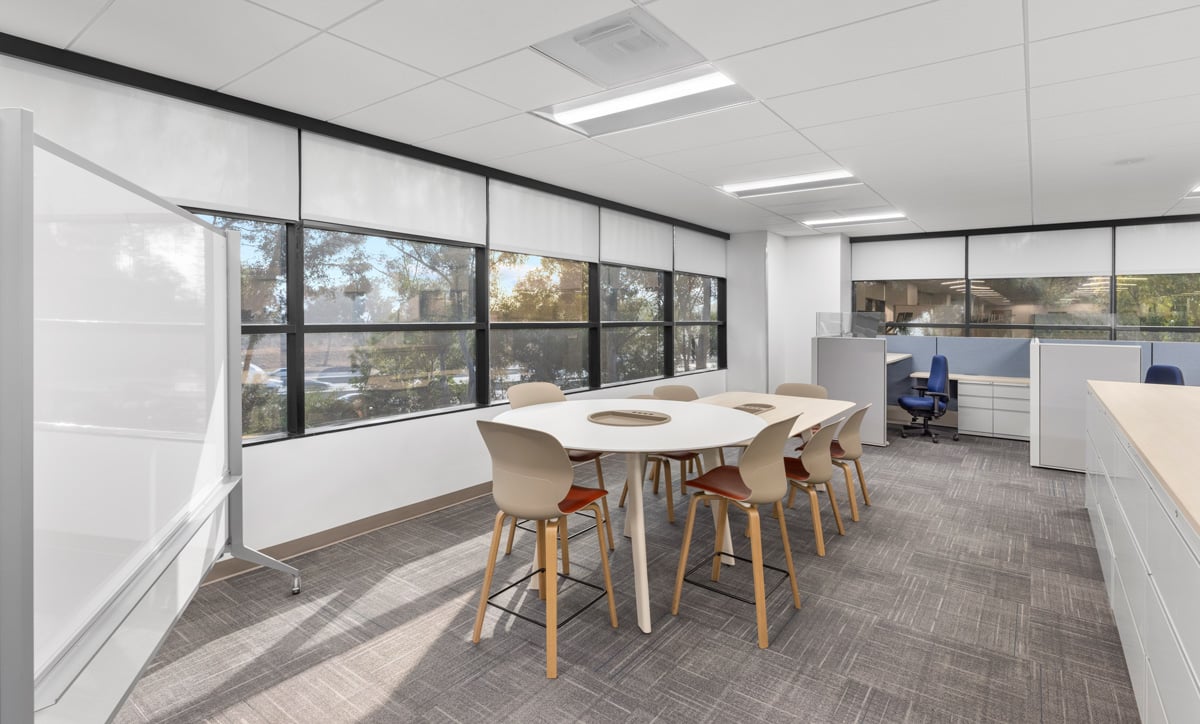
Office seating is recommended as an initial category. The price differential between conventional and certified sustainable task chairs has largely closed as sustainability became industry standard.
Office seating typically offers low-risk entry. The price differential between conventional and certified sustainable task chairs has largely closed as sustainability became industry standard. Certifications are well-established and widely available. The TCO advantages of quality seating are easily documented through warranty terms and ergonomic performance research. A successful, sustainable seating purchase that meets your budget and expectations builds trust in sustainable approaches across other categories.
Unisource Solutions recommends phased approaches that document outcomes at each stage: initial category selection based on market analysis, specification development that includes certification requirements, procurement through the right competitive process, deployment and user acceptance documentation, and outcome reporting that captures both environmental metrics and fiscal performance. This evidence base supports expanded sustainable procurement across additional categories.

County of Los Angeles Department of Public Social Services, Monterey Park, California
Navigating Complexity Through Partnership
Every public agency operates within unique procurement rules, political dynamics, and organizational cultures. What works for a large state department may not translate directly to a small municipal government. The underlying principles hold: specification embedding, cooperative leverage, TCO framing, end-of-life planning, and supply chain transparency, but implementation requires context-specific adaptation.
Unisource Solutions works extensively with public sector clients across California, bringing experience with government procurement requirements, sustainability certification frameworks, and the political dynamics of public purchasing decisions. If you're navigating pressure to improve environmental performance while constrained by procurement rules that seem to conflict with sustainability, we can share what's worked for similar agencies and help structure approaches that satisfy both taxpayer accountability and environmental responsibility.
Looking for sustainable furniture procurement strategies that work within public sector constraints?
Contact our team at Unisource Solutions to discuss your agency's requirements.