

Procurement decisions that optimize for initial acquisition cost often produce the highest total expenditure over time. This paradox is especially pronounced in furniture procurement, where the gap between purchase price and total cost of ownership can exceed 200% across a fifteen-year lifecycle. Understanding this gap and building analysis frameworks that capture it transforms furniture procurement from administrative purchasing into strategic investment.
For facilities managers and A&D professionals specifying furniture for institutional clients, lifecycle cost analysis provides the evidence base for recommending quality investments over budget alternatives. The challenge lies in quantifying costs that don't appear on initial purchase orders but materialize predictably over time: premature replacement cycles, maintenance burden, disposal expenses, reconfiguration limitations, and productivity impacts. Here we present a framework for comprehensive total cost of ownership analysis applicable across public sector, healthcare, higher education, and corporate contexts.

The Acquisition-Cost Fallacy
Standard procurement practice evaluates furniture on acquisition cost—the amount paid at purchase. This metric appears objective, comparable, and fiscally responsible. But furniture isn't consumed at purchase; it's used over years or decades. A desk purchased today will serve through multiple organizational restructurings, technology generations, and potentially leadership transitions. The purchase price represents only the entry point to an ongoing cost stream.
Industry lifecycle cost frameworks developed by BIFMA (Business and Institutional Furniture Manufacturers Association) and facility management research from IFMA (International Facility Management Association) consistently demonstrate that acquisition costs represent only a fraction of total furniture lifecycle costs for institutional applications, with ongoing expenses including maintenance, reconfiguration, early replacement, and disposal accounting for the majority of total expenditure over a fifteen-to-twenty-year horizon. These are cost categories that low-bid procurement systematically ignores.
The acquisition-cost fallacy produces consistent patterns. Procurement selects the lowest-bid options. Within three to five years, maintenance issues emerge. By years seven to ten, replacement becomes necessary, often before budget cycles are anticipated. The "savings" from low-bid procurement become sunk costs, and the organization pays again for replacement. Meanwhile, organizations that invested in quality alternatives are still using their original furniture with minimal maintenance burden.
| COST CATEGORY | WHAT TO MEASURE | TYPICAL IMPACT | WHO BEARS IT |
|
Replacement cycle
Lifespan & purchase frequency |
Expected useful life, warranty terms, annualized purchase cost over analysis period
|
High | Procurement / capital budget |
| Maintenance & repair Ongoing service burden |
Labor hours, parts cost, work order frequency, parts availability over time | Medium–high | Facilities / operations budget |
| End-of-life disposal Residual value or removal cost |
Hauling & tipping fees, secondary market value, take-back program eligibility | Medium–high | Facilities / surplus property |
| Reconfiguration adaptability Flexibility over org changes |
Modular system capability, projected reorganization events, replacement vs. adjustment cost | Medium–high | Procurement / capital budget |
| Productivity & wellbeing Ergonomic & injury risk |
Musculoskeletal complaint rates, workers' comp claims, ergonomic certification standards | Variable | HR / risk management |
Cost Category 1: Replacement Cycle Acceleration
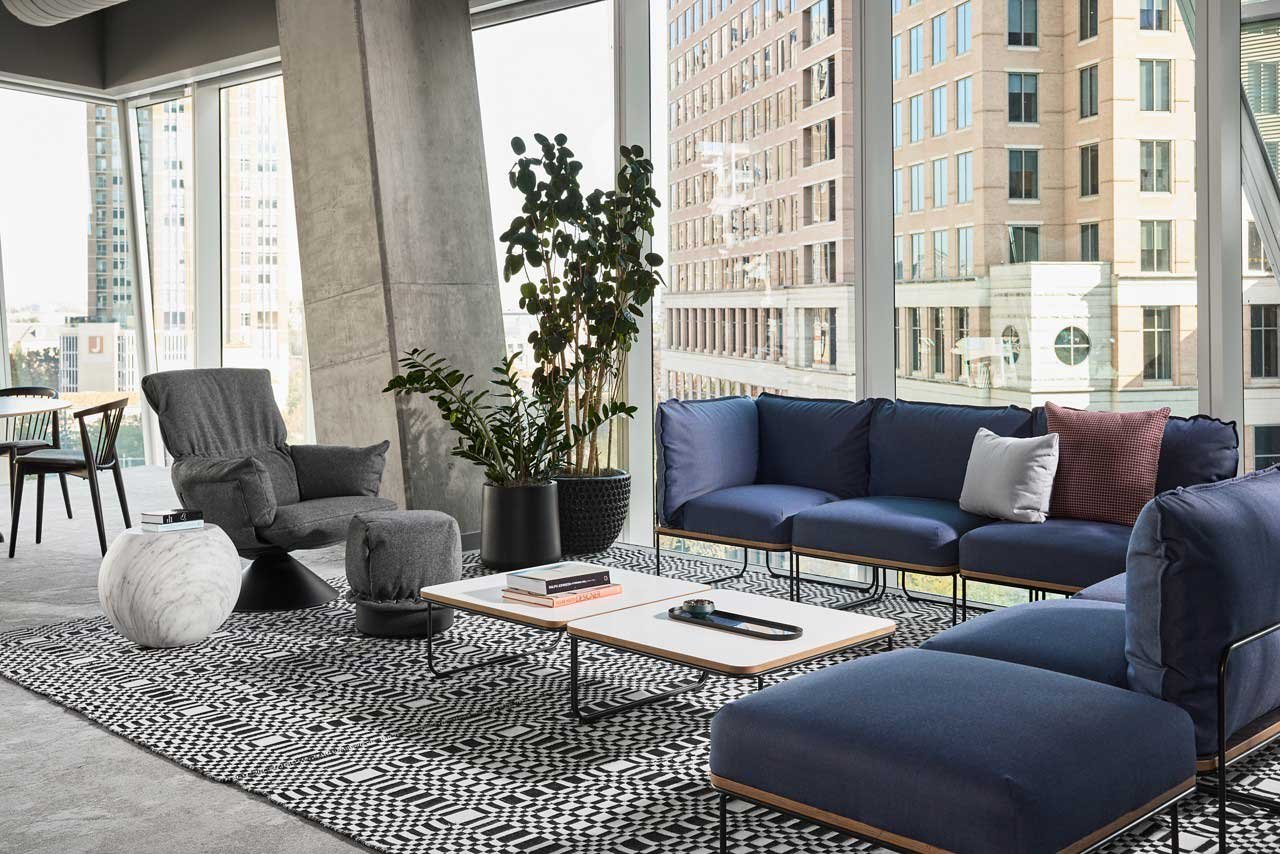
Product lifespan represents the most significant hidden cost variable. Industry research indicates that contract-grade furniture from established manufacturers typically delivers twelve to twenty years of service in institutional applications, while budget alternatives often require replacement within five to eight years. The lifespan difference alone can more than double the effective annual cost.
Warranty terms provide proxy indicators for expected lifespan. Quality task chairs carry twelve to fifteen-year warranties; budget alternatives typically offer three to five years. Manufacturers set warranty terms based on actuarial expectations. A twelve-year warranty signals manufacturer confidence in twelve-year performance.
Beyond warranty, construction quality determines real-world durability. Contract-grade furniture uses higher-density foams that retain resilience, steel frames that resist deformation, and fastening systems designed for decades of use. Budget furniture economizes on materials and construction that affect longevity, even when the initial appearance is similar. The differences manifest over the years, not at delivery inspection.
| METRIC | BUDGET CHAIR | QUALITY CHAIR |
|
Purchase price
|
$300 | $600 |
| Expected lifespan | 5 years | 15 years |
| Typical warranty | 3–5 years | 12–15 years |
| Replacements over 15 years | 3x | 1x |
| Total acquisition cost (15 yr) | $900 | $600 |
| Annualized cost | $60 / yr | $40 / yr |
At Unisource Solutions, our lifecycle analyses calculate annualized cost based on expected useful life, projecting replacement cycles across standard analysis periods of fifteen to twenty years. A $300 chair lasting five years costs $60 annually; a $600 chair lasting fifteen years costs $40 annually, resulting in a 33% savings despite twice the purchase price.
Cost Category 2: Maintenance and Repair Burden
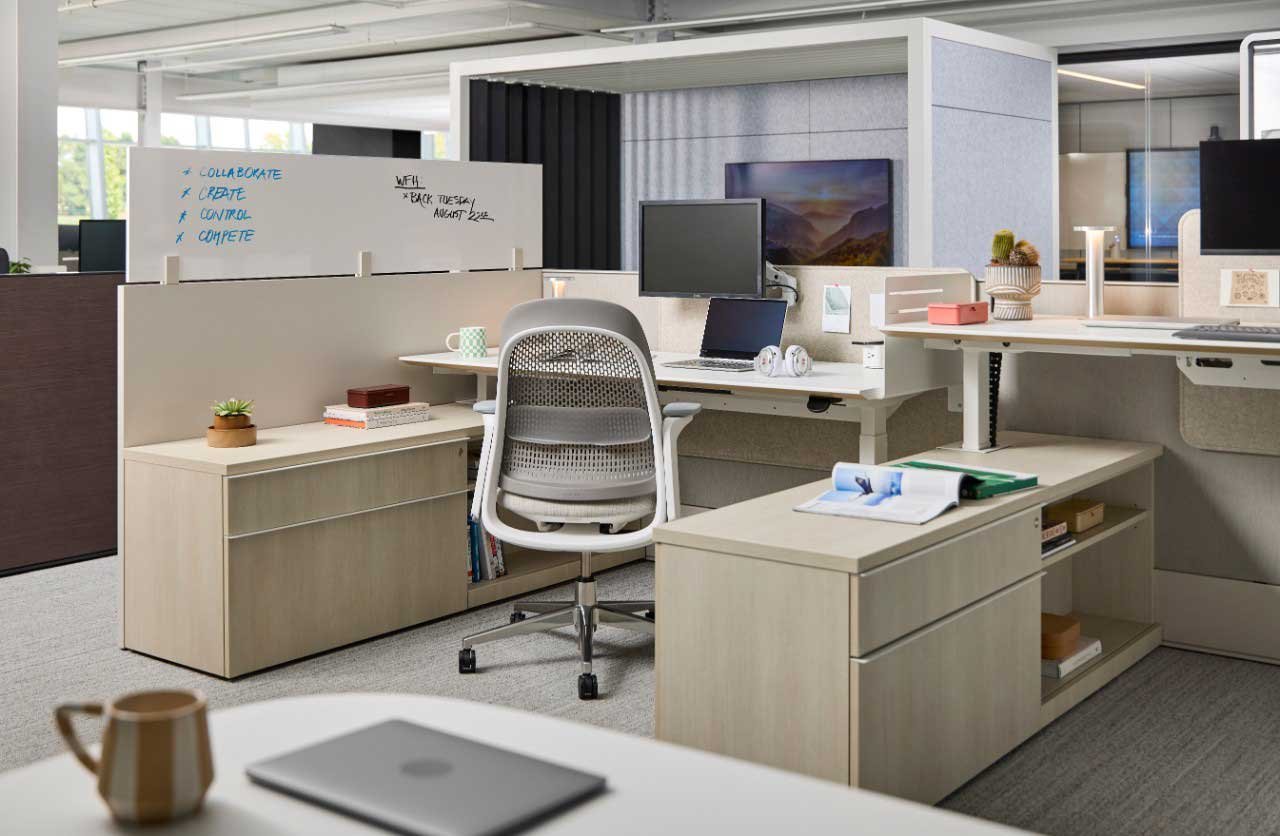
Before furniture fails, it degrades incrementally. Chairs need new armrests, gas cylinders, and casters. Desks require drawer repairs, surface refinishing, and hinge replacements. Panel systems need tile replacement, frame repainting, and electrical work. Each intervention consumes facilities staff time, parts inventory, and often disrupts work areas during repair.
Quality furniture is engineered for serviceability. Components are designed for replacement; parts are available, procedures are documented, and repair restores full function. Budget furniture often cannot be economically repaired: proprietary parts become unavailable (particularly when manufacturers exit the market), repair costs approach replacement cost, and fixes don't last because underlying construction is inadequate.
The maintenance cost differential compounds over time. Quality furniture might require one significant service intervention over fifteen years (cylinder replacement on a task chair, for example). Budget furniture might require three or four interventions before reaching premature replacement. Each intervention also carries indirect costs: work order processing, scheduling coordination, workspace disruption, and employee time spent accommodating repair activities.
Unisource Solutions incorporates maintenance projections into TCO models based on warranty terms, manufacturer service infrastructure, and historical patterns from similar products in comparable applications. Facilities managers often underestimate these costs because maintenance is distributed across time, handled by different personnel, and charged to general operating budgets rather than furniture accounts.
Cost Category 3: End-of-Life Disposal
When furniture reaches end-of-life, it must go somewhere. Quality furniture often has positive residual value. It can be sold through liquidation markets, donated to nonprofit organizations, or returned to manufacturers through take-back programs. Budget furniture typically has negative end-of-life value: it goes to landfill, and the organization pays hauling and tipping fees.
Disposal costs rarely enter procurement analysis because they occur years after purchase and come from different budget lines. But they're predictable. A 200-workstation replacement generating 40,000 pounds of furniture waste at $0.15 per pound disposal cost represents $6,000 in fees—plus administrative costs of surplus property processing, hauling coordination, and documentation.
Sustainable furniture from manufacturers with extended producer responsibility commitments may qualify for take-back programs that eliminate disposal costs entirely. The manufacturer assumes end-of-life responsibility, recovering materials for recycling or refurbishment. Quality products from recognized manufacturers retain secondary-market value that liquidation services will pay for rather than charge to remove. Donations to schools, nonprofits, or community organizations provide tax benefits while avoiding disposal costs.
Our TCO analysis project end-of-life scenarios: expected residual value (or disposal cost) based on product category, manufacturer take-back availability, and secondary market conditions. For budget furniture, this is typically a cost; for quality furniture, it's often neutral or positive. The difference represents real money, just money that procurement analysis usually misses.
Cost Category 4: Reconfiguration Adaptability
Organizations change. Departments grow and contract. Technology evolves. Space needs shift. Furniture that cannot adapt to these changes becomes an obstacle, and adapting it becomes expensive.
Quality modular systems are designed for reconfiguration. Workstations can be resized through component adjustment. Panels can be rearranged without purchasing new inventory. Power and data systems accommodate relocation without electrical contractor involvement. The furniture adapts to organizational evolution rather than constraining it.
Budget furniture is typically fixed—what you bought is what you have. Reconfiguration often means replacement: new furniture purchases, disposal of functional items, and all associated procurement overhead. Over a fifteen-year lifecycle, most organizations undergo multiple reorganizations affecting workspace layout. Flexible furniture absorbs these changes at marginal cost; inflexible furniture triggers repeated capital cycles.
Our team evaluates flexibility as an explicit TCO factor, projecting expected reconfiguration events based on organizational patterns and assessing furniture systems on their ability to accommodate change without replacement. The analysis reveals surprisingly differentials: budget furniture that appears less expensive often costs more when reconfiguration requirements are included.
Cost Category 5: Productivity and Wellbeing Impacts
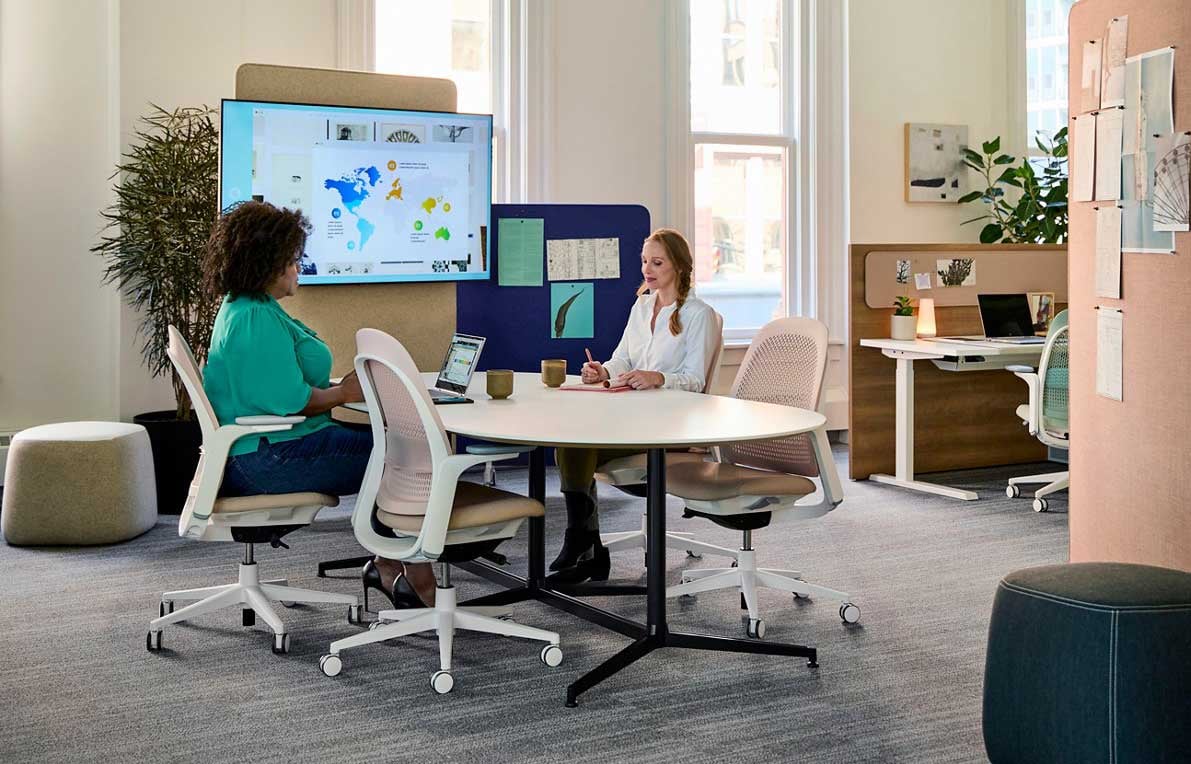
Employees interact with furniture for thousands of hours annually. The quality of that interaction affects comfort, health, and productivity. These impacts are real even when they don't appear on balance sheets, and some impacts do appear on balance sheets through workers' compensation claims and healthcare costs.
Research from Cornell University's Human Factors and Ergonomics Laboratory demonstrates that properly specified ergonomic seating reduces musculoskeletal complaint rates by 30-50% compared to inadequate seating. For organizations where a single workers' compensation claim can cost tens of thousands of dollars, the risk reduction from quality seating represents meaningful cost avoidance. OSHA reports that work-related musculoskeletal disorders account for nearly 400,000 cases annually, with direct costs exceeding $50 billion.
Beyond injury risk, furniture quality signals organizational values. Employees in uncomfortable environments understand that their employer chose to economize at their expense. The morale and engagement implications don't carry line-item costs, but they influence productivity, retention, and the discretionary effort that differentiates high-performing organizations.
Unisource Solutions includes productivity and risk factors in TCO presentations qualitatively, acknowledging that precise quantification is difficult but that the impacts are real and potentially substantial. For organizations with documented ergonomic injury history, the analysis can draw on actual claims data to project risk-adjusted costs.
Framework Application: Comparative Analysis Model
Total cost of ownership analysis requires a consistent methodology to produce defensible comparisons. Our framework applies the following structure across all furniture procurement evaluations:
| FACTOR | WHAT TO MEASURE | DATA SOURCE |
|
1. Acquisition cost
Purchase price · delivery · installation |
Vendor quotes, bid responses, installation estimates | Procurement RFP / purchase orders |
| 2. Lifecycle cost projection Useful life · replacement cycles |
Expected lifespan, number of replacements within analysis period, annualized cost | Warranty terms, manufacturer spec sheets, comparable installation data |
| 3. Maintenance projection
Service frequency · parts · labor
|
Anticipated repair events, parts cost and availability, facilities labor hours per intervention | Warranty coverage, manufacturer service network, facilities work order history |
| 4. End-of-life projection Residual value · disposal cost |
Expected resale or liquidation value, hauling and tipping fees, take-back program eligibility | Secondary market pricing, local disposal rates, manufacturer EPR commitments |
| 5. Reconfiguration assessment Flexibility · adaptation cost |
Modular system capabilities, projected reorganization events, cost to reconfigure vs. replace | Manufacturer system specs, org change history, facilities planning records |
| 6. Risk factors Ergonomics · injury exposure |
Ergonomic certification, musculoskeletal complaint rates, workers' comp claim frequency and cost | ANSI/BIFMA standards, HR injury records, OSHA incident logs |
From Analysis to Action
If the total cost of ownership analysis consistently favors quality furniture, why do organizations continue selecting low-bid options? Usually, because decision-makers don't see the full picture. Initial procurement involves one budget, one decision-maker, and one moment in time. Replacement cycles, maintenance costs, and disposal expenses are distributed across years, handled by different personnel, and charged to different accounts. The connection to original purchase decisions is invisible.
Breaking this pattern requires explicit TCO documentation before procurement decisions. The analysis must connect future costs to present choices in ways that budget authorities and oversight bodies can evaluate. The methodology must be rigorous enough to withstand audit scrutiny while accessible enough to inform practical decisions.
Our expert team develops TCO analyses for institutional clients across the public sector, healthcare, higher education, and corporate applications. Our models incorporate actual market pricing, manufacturer-specific warranty and service terms, and historical performance data from comparable installations. The deliverable isn't an argument for spending more; it's evidence that spending appropriately on quality furniture is the fiscally responsible choice when total costs are properly calculated.
Ready to understand the true cost of your furniture procurement options?
Contact our team at Unisource Solutions for a total cost of ownership analysis tailored to your organization.